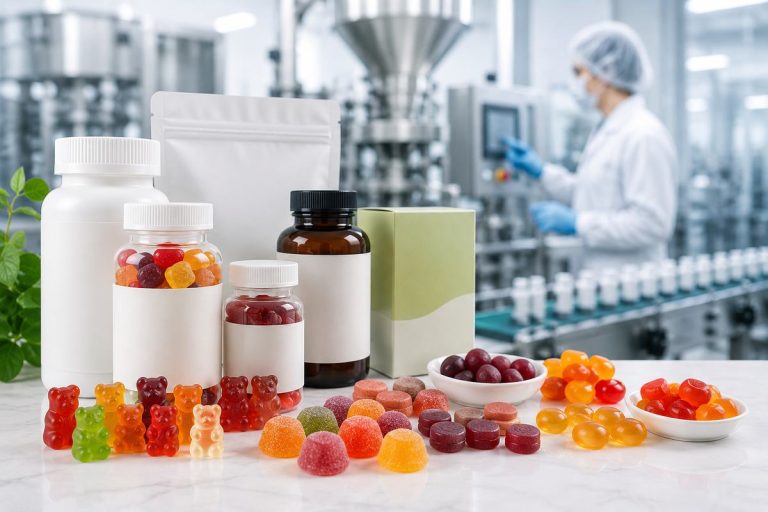
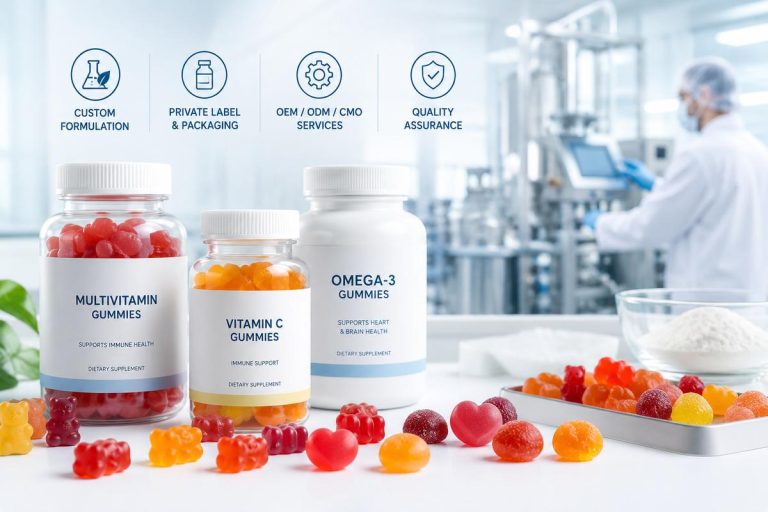
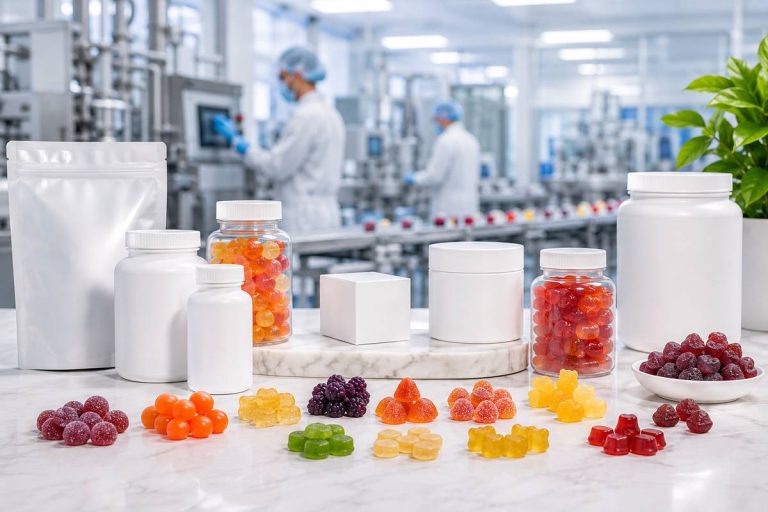

Inconsistent gummy quality risks potency loss and recalls, damaging brands and trust; rigorous quality control ensures safety, compliance, and consistent products—read on to understand how.
Quality control in vitamin gummy production is a systematic process ensuring safety, potency, and consistency from raw materials to finished products. It applies to manufacturers and brand owners, with decisions based on ingredient verification, process controls, and final product testing to meet regulatory and consumer expectations.
Below, we examine standards, risks, evaluation factors, and comparisons to help buyers assess reliable gummy manufacturers.
Definition & Scope
What Is Quality Control in Vitamin Gummy Production?
Quality control is a structured system of inspections, tests, and procedures ensuring gummies meet defined safety and quality standards.
Its main function is to maintain consistent potency, texture, flavor, and compliance.
It does not include marketing claims or post-distribution retail handling.
Who Should Choose This Option?
Brand owners selling vitamin gummies under private labels
Importers targeting regulated markets like the US or EU
Distributors requiring stable, repeatable product quality
Who Should Avoid This Option?
Short-term traders ignoring compliance risks
Buyers prioritizing lowest price over safety and consistency
Key Evaluation Factors
Factor 1: Raw Material Verification
Why it matters: Poor-quality vitamins or gelatin directly affect potency and safety.
How to verify: Request COAs, supplier audits, and incoming material testing records.
Common mistake: Trusting supplier claims without third-party documentation.
Factor 2: Process Control & In-Process Testing
Why it matters: Temperature, mixing time, and molding affect uniformity and stability.
How to verify: Check SOPs, batch records, and in-process inspection checkpoints.
Common mistake: Assuming automation alone guarantees consistency.
Factor 3: Finished Product Testing
Why it matters: Confirms label claims, microbial safety, and shelf stability.
How to verify: Review potency tests, microbial reports, and retention samples.
Common mistake: Skipping routine testing to reduce lead time.
Risks and How to Reduce Them
Risk 1: Inaccurate vitamin dosage → Implement batch-level potency testing
Risk 2: Microbial contamination → Enforce GMP hygiene and environmental monitoring
Risk 3: Texture or flavor inconsistency → Standardize formulations and process parameters
Comparison with Alternatives
| Item | Option A: Full QC System | Option B: Partial QC | Option C: Minimal QC |
|---|---|---|---|
| Cost | Higher upfront | Moderate | Low |
| MOQ | Flexible | Medium | Often high risk |
| Lead Time | Stable | Variable | Unpredictable |
| Compliance | Strong | Limited | Weak |
| OEM Ability | High | Medium | Low |
Common Real-World Mistakes
Choosing factories without documented QC systems
Ignoring stability and shelf-life testing
Overlooking regulatory differences between markets
Why Experienced Buyers Prefer Structured Suppliers
Clear communication process
Compliance-first mindset
Stable production and QC systems
Summary
Strong quality control is essential to ensure vitamin gummy safety, compliance, and consistent performance across global markets.